Friday, 19 May 2017

Mensuration

Learn how to measure the Area and Perimeter of 2D figures and Surface Area and Volume of 3D figures.

Square:

Square area Formula
Area:  2 × Length
Perimeter:  4(Length) or ( L+L+L+L )

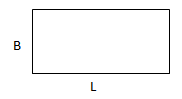
Rectangle:


Capture10
Area:  L×B
Perimeter:  2(L+B) or (L+L+B+B)

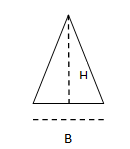
Triangle:

Capture11
Area: Capture9a × Base × Height
Perimeter: Sum of all three sides.

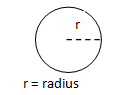
Circle:

Capture12
Area: Capture12a
Circumference: Capture12b

Semi Circle:Capture13

Area:Capture13a
PerimeterCapture13b

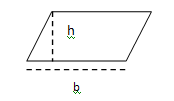
Parallelogram:

Capture14
Area: base × height
Perimeter: 2 (a+b) or Sum of all sides.

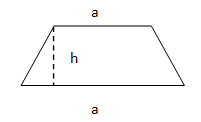
Trapezium:

Capture15
Area: Capture9a (a+b) h
Perimeter: Sum of all sides

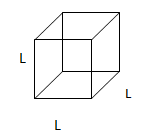
Cube:

Capture16
Surface Area: 6L2
Volume: L3 or L × L × L

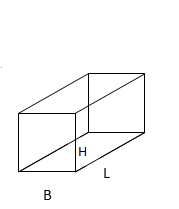
Cuboid:

Capture17
 Surface Area: 2 (BL+BH+LH)
Volume: L × B × H

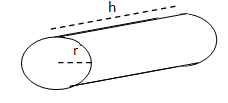
Cylinder:

Capture18
Surface Area:  Capture18a
Total Surface Area: Capture18b

Prism:

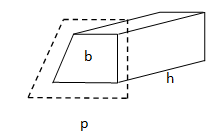
Capture19
Surface Area: (Perimeter of the base area (p) + 2 (base area))
Volume: Base area × height

Sphere:        

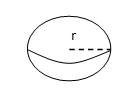
Capture20
Surface Area:Capture20a
Volume:Capture20B

For Hemisphere:
Surface area:Capture21a
Volume:Capture20C

Set Language And Notation

Set:

A set is a collection of objects, things or symbols which are clearly identified.
The individual objects in the set are called the elements or members of the set.
Elements may be specified in two ways:
  • By listing the elements
  • By description
E.g.
Listing                                                             Description
{2, 4, 6, 8, 10}                                                  The set of even numbers between 1 and 11
{a, e, i, o,u}                                                      The set of vowels in the alphabet

{} These braces stand for the word “the set of”
e.g.  {Even numbers between 1 and 11}

Naming sets and number of members in a set:

Usually, we use Capital letters to denote a set and small letters to denote members of the set.
n ( ) indicates the total number of members in a set.
E.g.
A= {1, 3, 5, 7, 9, 11}      n (A) = 6
B= {2, 4, 6, 8}         n (B) = 4

Membership of the set:

Є is an element of  (is a member of ) (belongs to)
Set is not an element of  (is not a member of) ( does not belongs to)
E.g.
A = {1, 3, 5, 7, 9, 11}
5 Є A, 9 Є A, 13Set  A

Finite Sets:

Set in which all the elements can be listed.
A= {1,3,5,7,9}  n(A) =5
B= {days of the week beginning with T}  n(B) = 2

Infinite Sets:

Sets in which it is possible to list all the members of a set.
C= {2, 4, 6, 8,10….}
E={x:x is a natural number}

Relations Of Sets:

Universal Sets: (Ƹ)

The set which contains all the elements.
All proper subsets formed within the universal set draw their elements from the available elements of the universal sets.

Complement Of a Set: (A`)

(Ƹ element – A element} = A`
If Ƹ = {2, 3, 5, 7, 11, 13}  and A = {2, 3, 7, 13}
A= {5, 11}

Equal Sets:(C)

Two sets A and B are said to be equal if and only they have exactly the same elements.
Two equal sets are also subsets (denoted by C) of each other.
A={2,4,6,8}           B={8,6,2,4}
Then
A=B      B=A      A C B  B C A

Subsets:

When each member of a set A is also a member of a set B, then A is a subset of B.
C is a subset of :When two sets have  exactly same elements or elements in the first set are also elements in the   second set.
Capture3is not a subset of: There is at least one element in the first set that does not belong to the second set.

Proper Subset:

When each member of a set A is also a member of a set B, but set B has MORE elements than set A, then set A is a proper subset of B, denoted by “A C B”. Therefore, in this case set B is not a proper subset of A (B Capture3 A)

C is a proper subset of: When each element in the first set also belongs to the second set, but the second set has more elements than the first set.
C is not a proper subset: When there is at least, one element in the first set that does not belong to the second set.
E.g. A = {1, 5, 9}     B = {1, 3, 5, 9}
       Therefore:    A C B   , B Capture3 A

Empty Set: ({} or Capture4)

A set which contains NO elements
An empty set in a subset of any set.

Intersection Of Sets: (Capture5)

Common elements in different sets.
A= {1,2,3,4,5,6}
B= {2,4,8,10}
ACapture5B = {2,4}

Union Of Sets: U
The Union of set A and set B is the set of all elements which are in A, or in B, or in both A and B. It is denoted by ‘A U B’ and is read as “the union of A and B”.

A= {1,3,4}    B={6,7,8}
A U B = {1,3,4,6,7,8}

Disjoint Sets:

If the two sets have No element in common then the two sets are called disjoint.
The intersection of two disjoint sets is null or empty.
e.g. A = {1,3,5,7}    and     B = {2,4,6,8,9}
ACapture5B =  Capture4   thus A and B are disjoint sets.

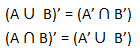
De Morgans Law:
Capture5B

Venn Diagram:

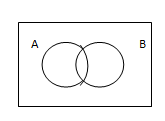
In a venn diagram, we use a rectangle to denote a universal set Ƹ and a loop such as circle or an oval to represent any set in Ƹ .
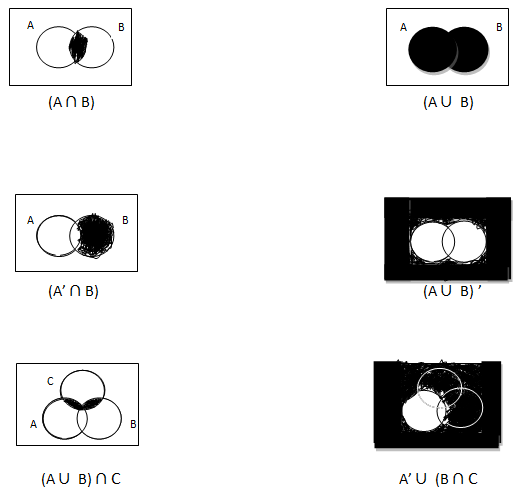
Capture7
Examples of Venn Diagrams:
Capture8

Number

Natural Numbers:

The natural numbers include whole numbers except 0.
E.g. 1,2,3,4,5,6…

Integers:

Positive natural numbers, negative natural numbers along with 0 are called integers.
-1,-2,-3,0,+1,+2,+3…

Prime Numbers:

A prime number is a number with exactly two factors (i.e. 1 and itself (1×3))
E.g. 2,3,5,7,111,13,17,19,23,29,31…

Composite Numbers:

Those numbers which have more than two factors.
E.g. 1,4,6,8,9,10,12,14,15,16,18,20…

Factors:

The factors of a number are the natural numbers which divide exactly into that number (without a remainder).
8:  1×8             12:  1×12
2×4                     2×6
3×4

Multiples:

Multiples of a number are numbers in its times table.
Multiples of 5 are 5, 10, 15, 20, 25, 30…

Highest Common Factor (HCF):

It is the highest factor which is common to all of the given numbers.
E.g.  8:  1×8                 12:  1×12
4                          2×6               In this example the common factors are 1, 2, 4 and the
4                Highest factor is 4; therefore the HCF of 12 and 8 is 4. 
In this example the common factors are 1, 2, 4 and the highest factor is 4; therefore the HCF of 12 and 8 is 4. 

Rational Number:

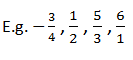
A rational number is one which can be expressed in the form  Number where a and b are integers and b is not equals to 0.
Capture1

Irrational Number:

Numbers that can’t be expressed as as a fraction or a ratio of 2 integers are known as irrational numbers.
Capture2

Real Numbers:

These include all rational, irrational, fractions and integers.

Terminating Decimals:

These are decimal numbers which stop after a certain number of decimal places.
E.g. 7/8 = 0.875 it stops after three decimal places.

Recurring Decimals:

These are decimal numbers which keep repeating a digit or a group of digits.
E.g. 137/259 = 0.528 957 528 957 528 957… the six digits 528 957 repeat in this order.

Even Number:

Numbers which are divisible by 2
E.g. 2, 4, 6, 8…

Odd Number:

Numbers which are not divisible by 2
E.g. 1, 3, 5, 7

Square Number:

It is the result of multiplying  a number by itself.
E.g. 12, 22, 32 ….. 1, 4, 9….

Cube Number:

It is the result of multiplying a number by itself 3 times.
E.g. 13, 23, 33 …. 1, 8, 27….

Significant Figures:

The following are few examples showing clearly what is meant by significant figures.
8064 = 8000 (correct to 1 significant figures)
8064 = 8100 (correct to 2 significant figures)
8064 = 8060 (correct to 3 significant figures)
0.00208 = 0.005 (correct to 1 significant figures)
0.00208 = 0.0021 (correct to 2 significant figures)
3.00508 = 3.01 (correct to 3 significant figures)

Decimal Places:

The following are few examples showing clearly what is meant by decimal places.
0.0647 = 0.1 (correct to 1 dp)
0.0647 = 0.06 (correct to 2dp)
0.0647 = 0.065 (correct to 3dp)
2.0647 = 2.065 (correct to 3dp)

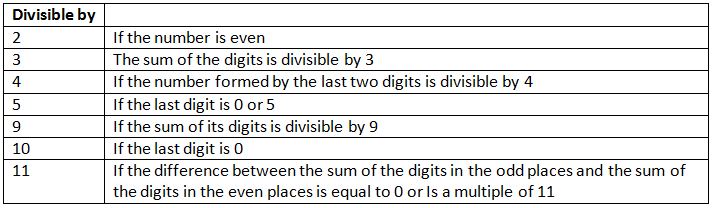
Test Of Divisibility:

Capture2b

PAST PAPERS

For the past papers , click here: http://papers.xtremepapers.com/index.php?dir=CIE/Cambridge%20International%20O%20Level/Mathematics%20D%20...